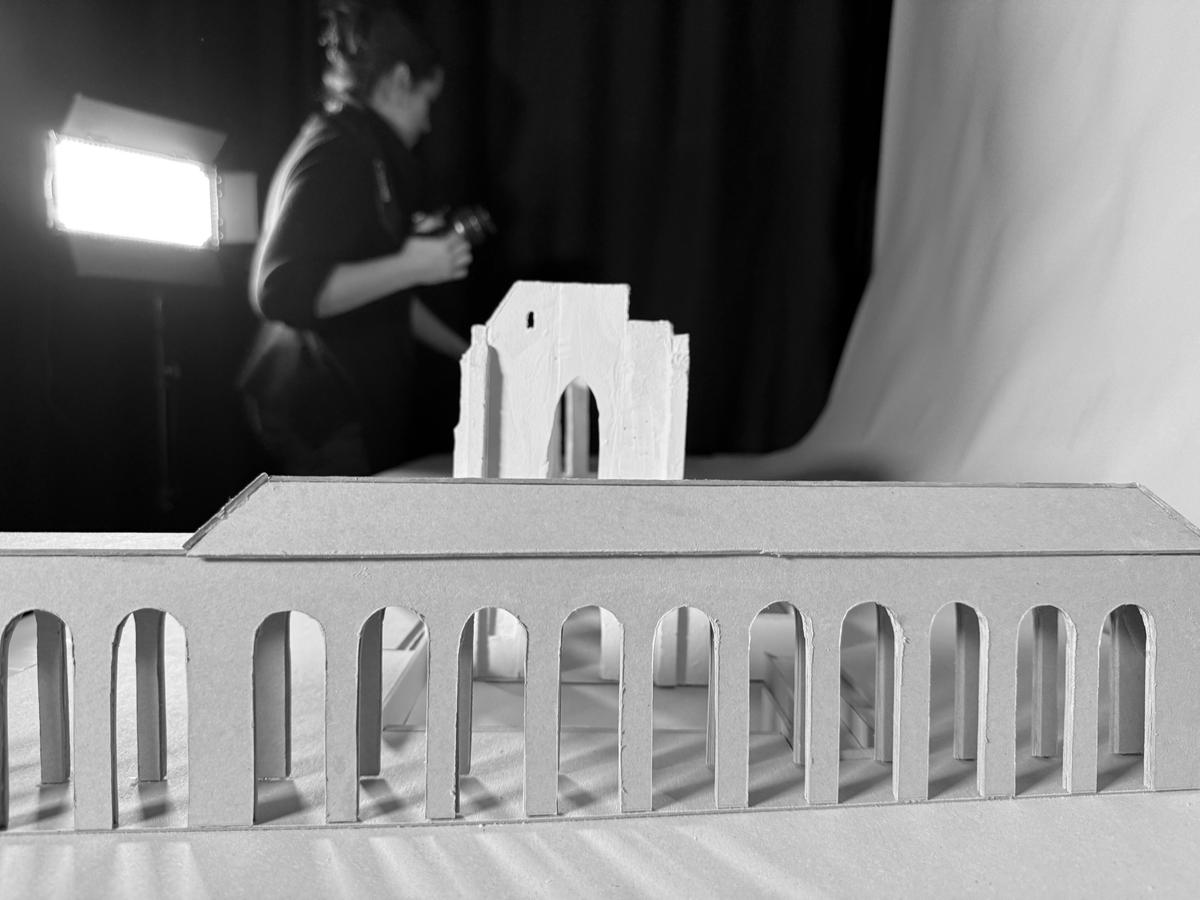
Analyse the ruin of Klosterkirche and come up with an idea for a better preservation and engagement with monument.
Klosterstraße 73a, 10179 Berlin, Germany
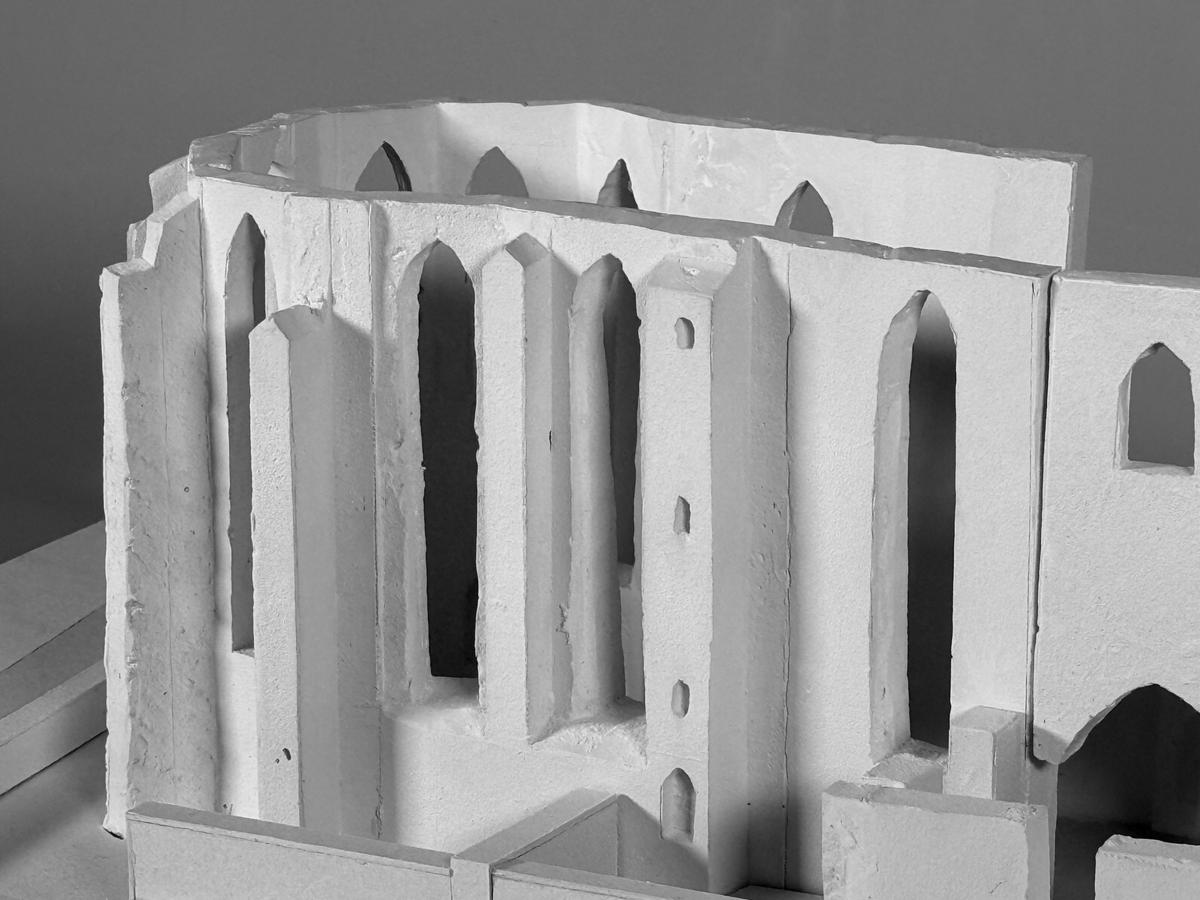
Klosterkirche stands as a preserved ruin in the centre of Berlin, holding centuries of history yet surrounded by an urban space that feels disconnected from its cultural weight. Today, heavy traffic and undefined edges make the monument easy to pass by. Based on historical research, the site was once a monastery church, later a school, before being destroyed during the war.
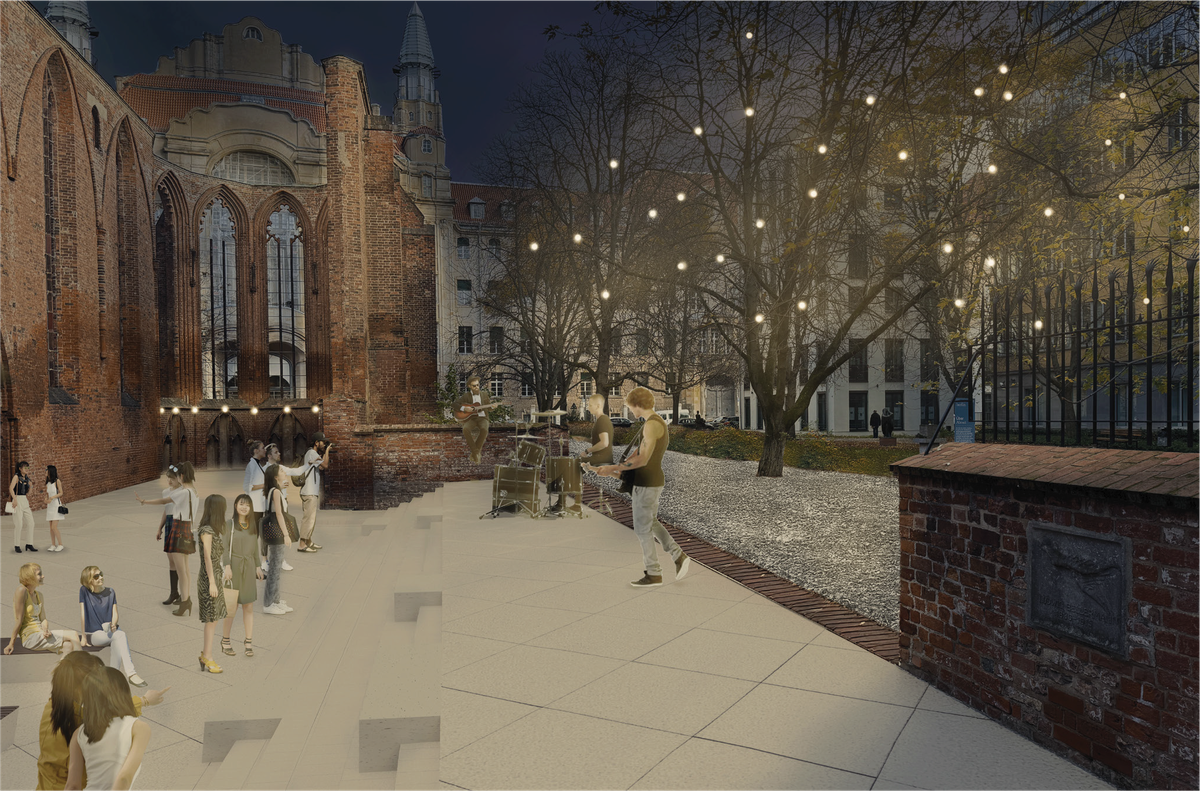
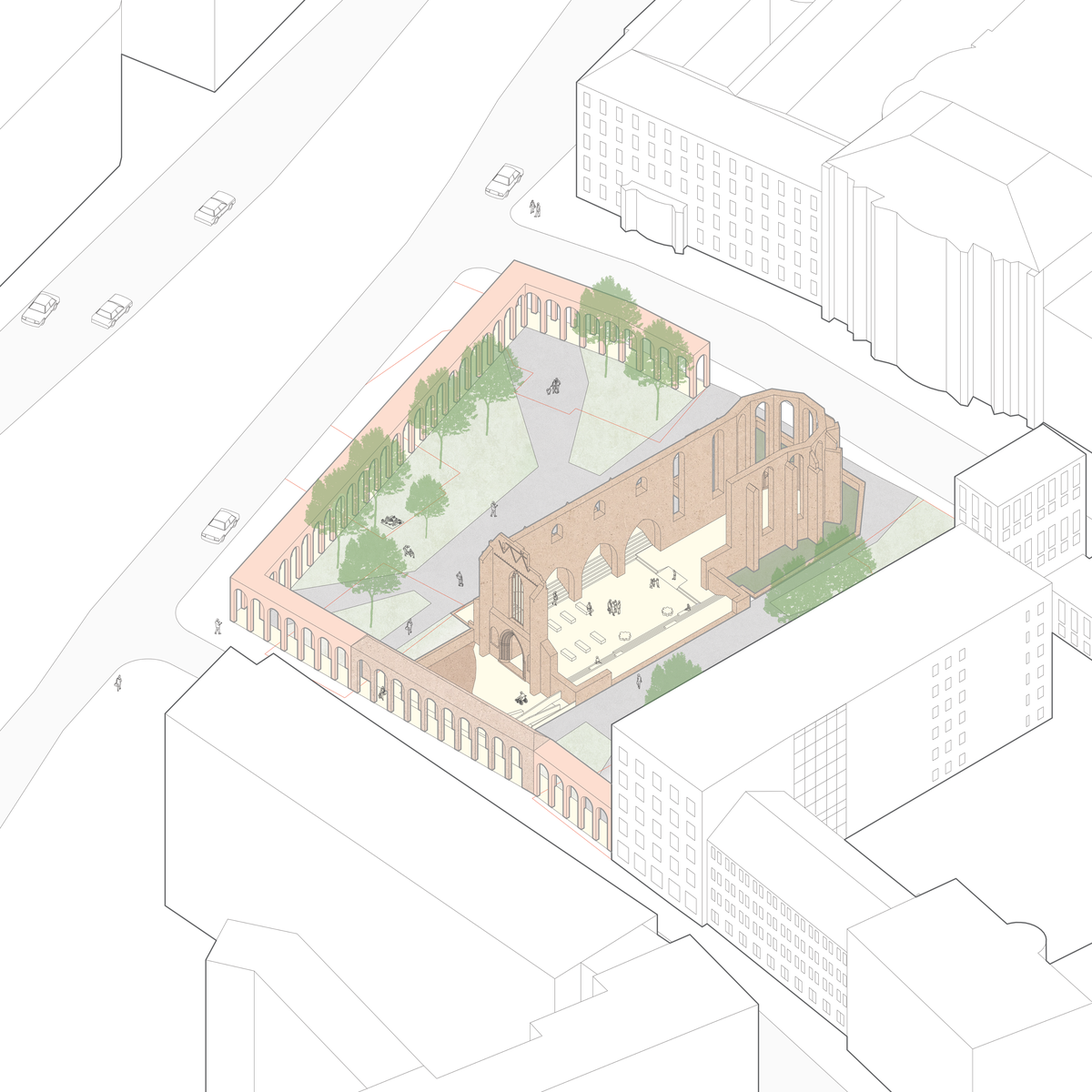
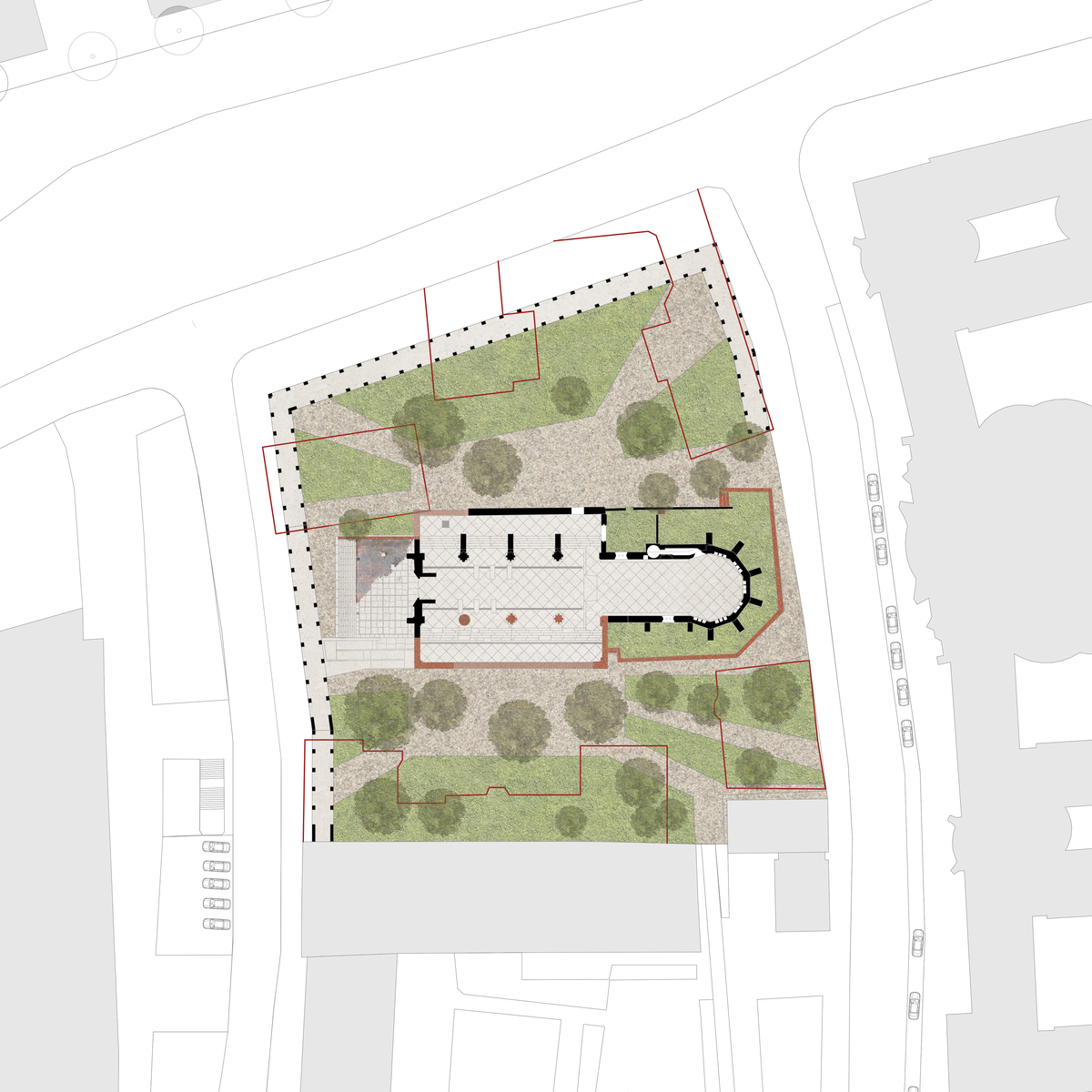
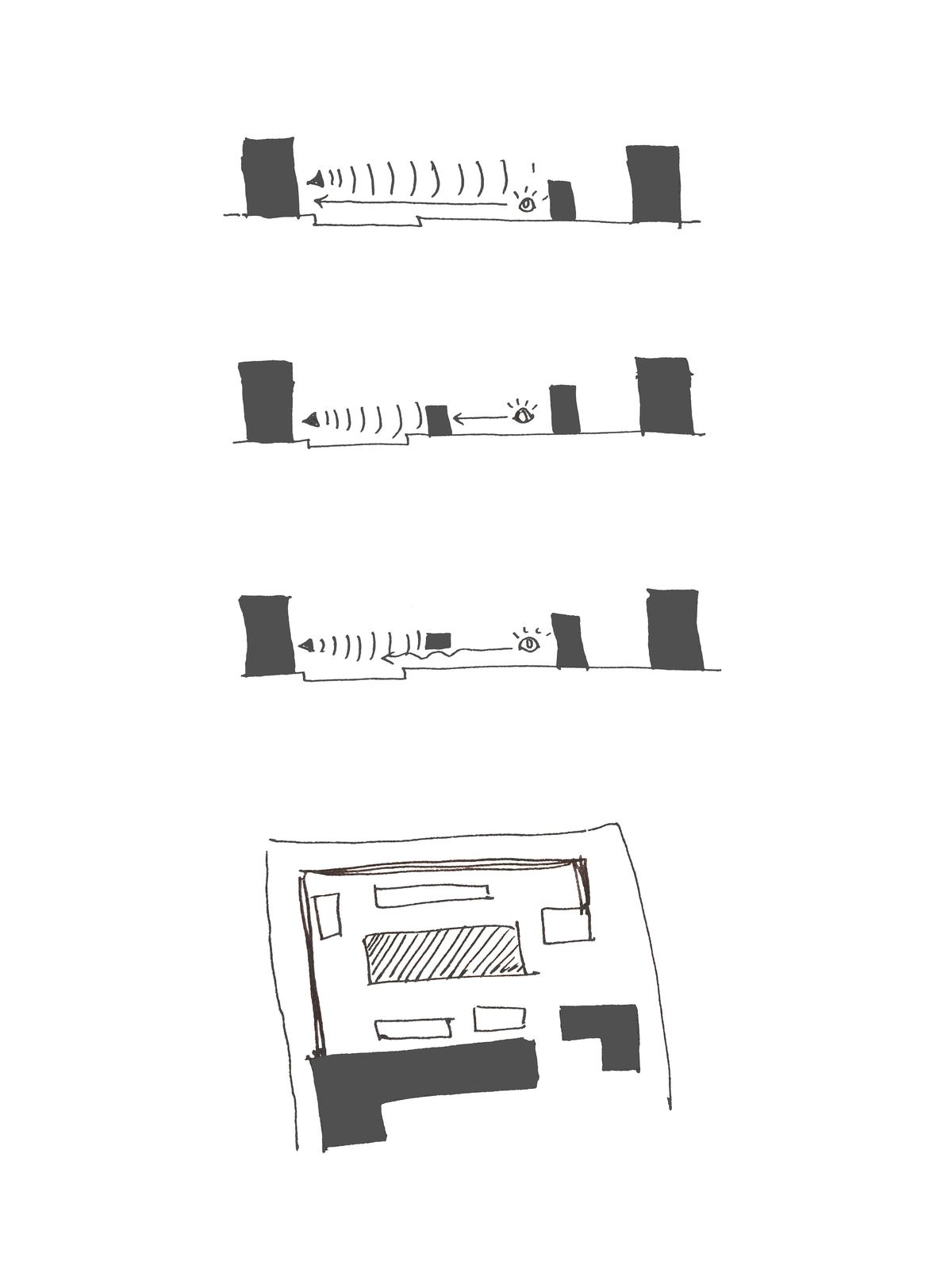
This project responds by reorganising the ground and introducing a light architectural frame that reconnects the ruin to its surroundings without touching it. Through these subtle interventions, the site becomes accessible and inviting again.
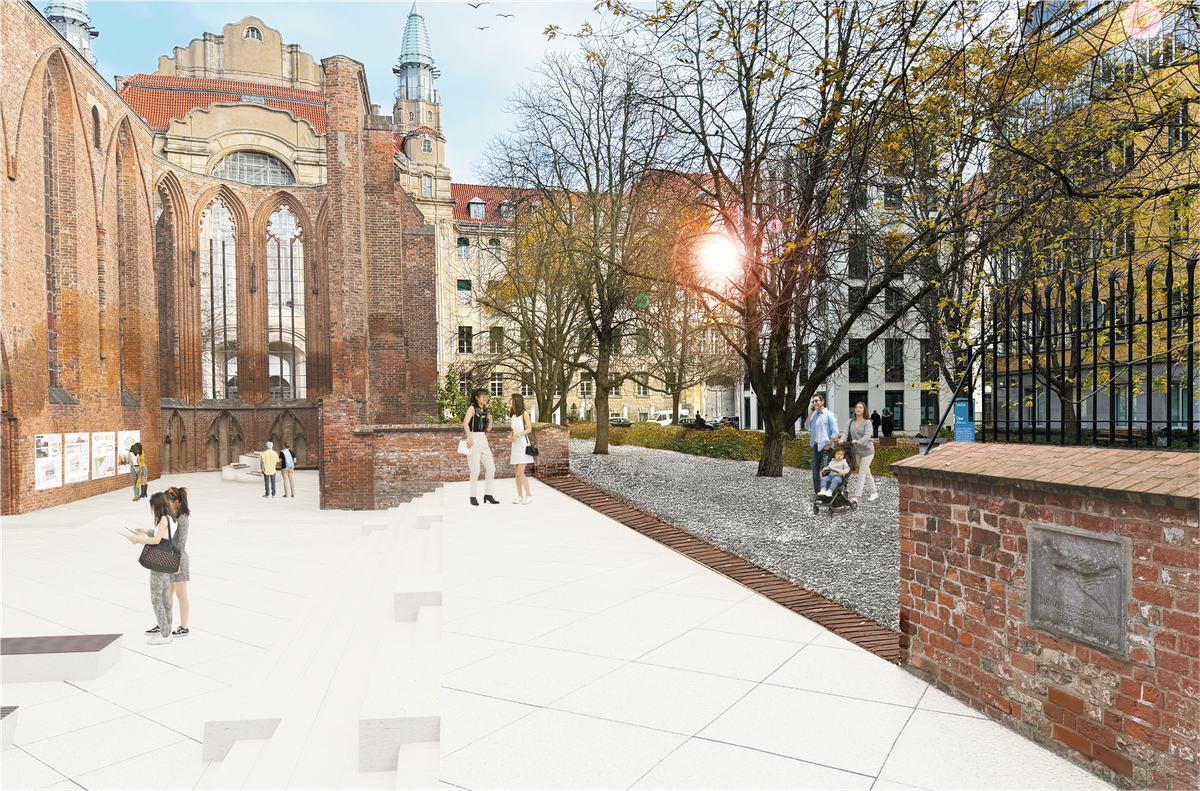
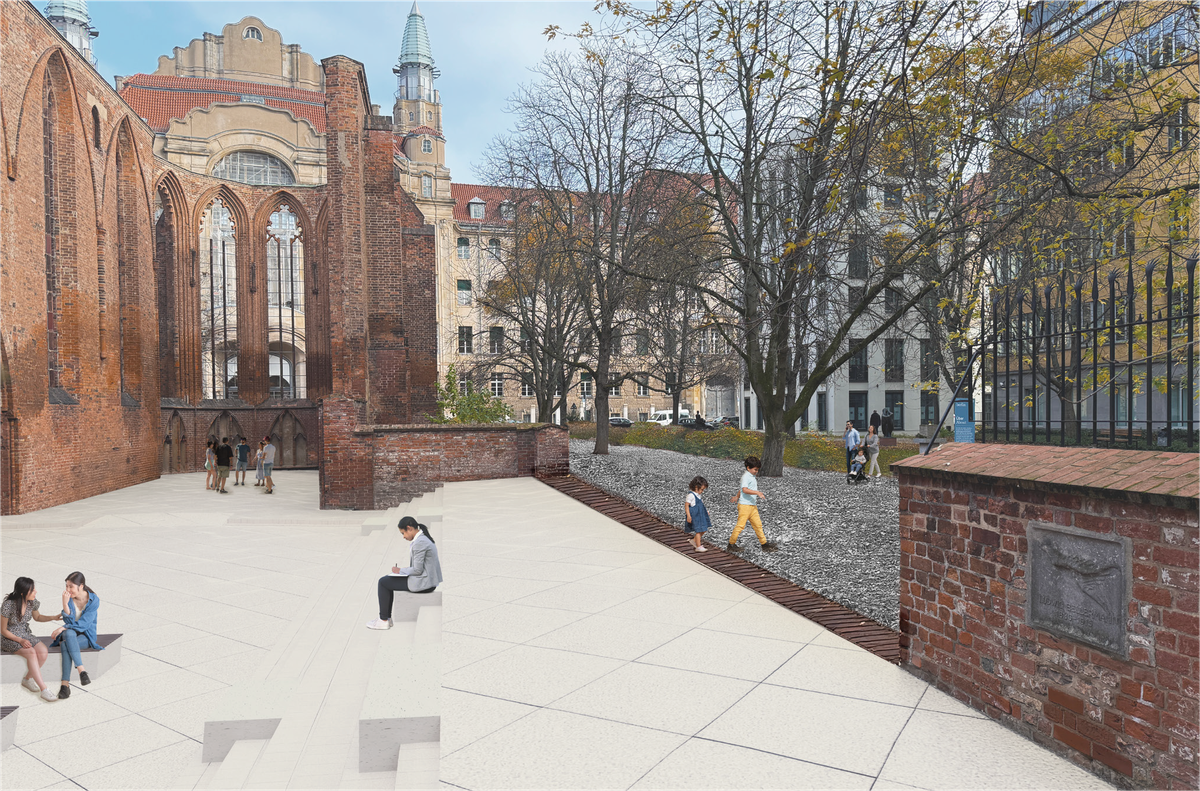
The main interventions connected directly to the church focus on opening the site, improving accessibility, and making the historical layers visible again, beginning with the removal of the fences that once enclosed the area.
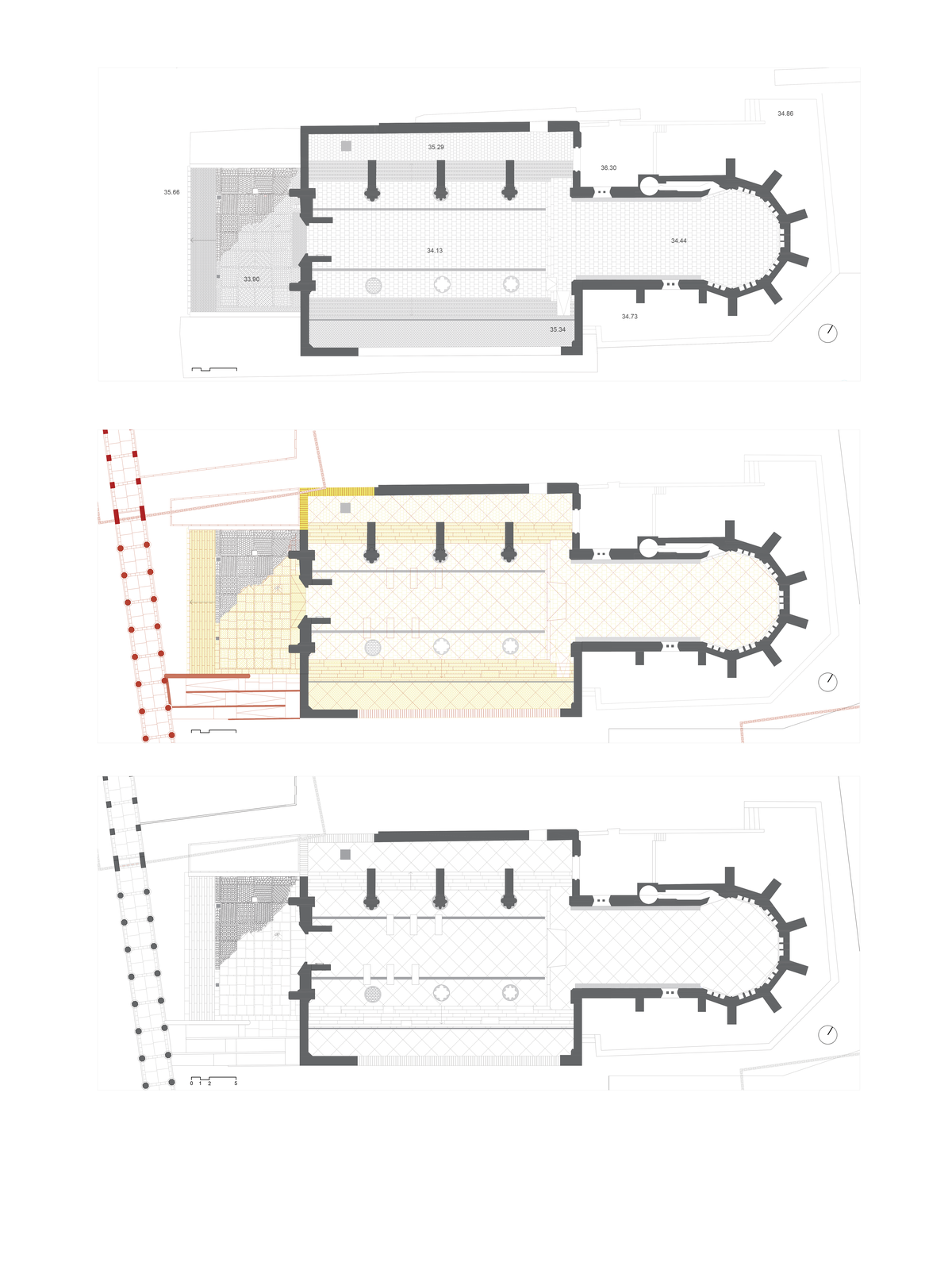
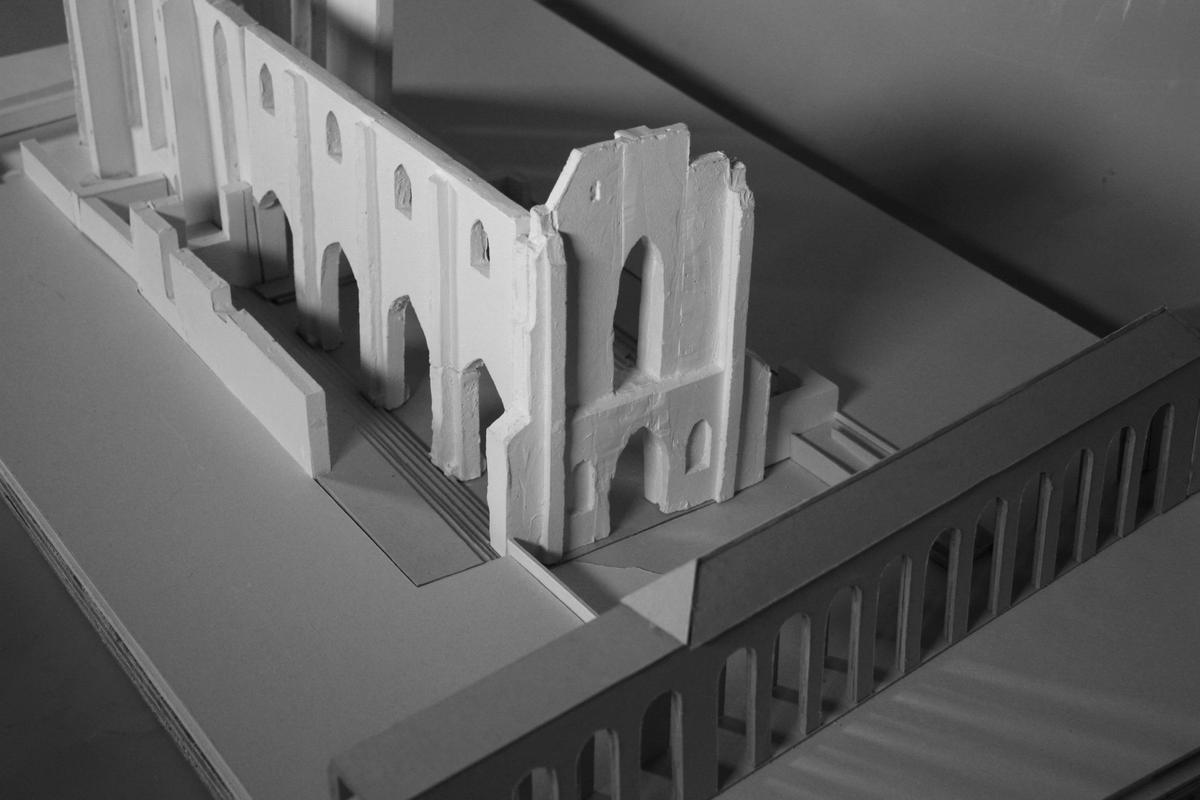
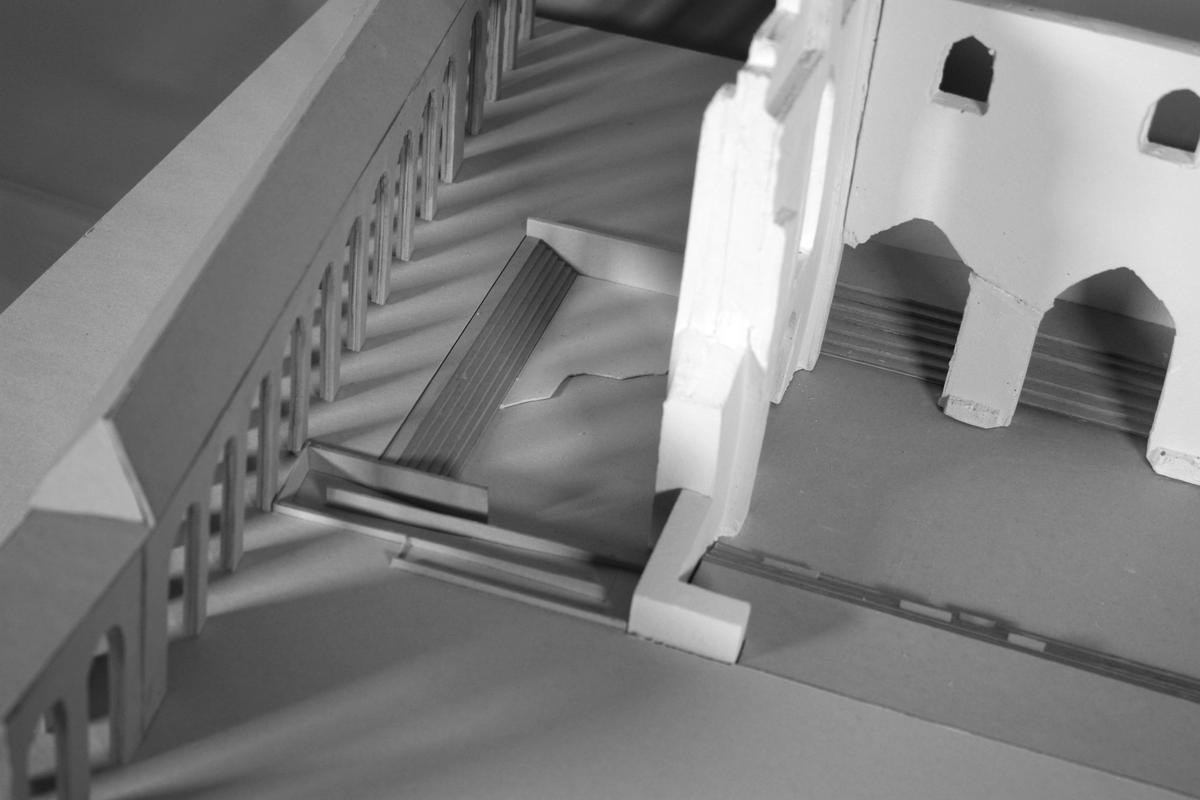
A reconstructed corner of the church is removed to create a clear and continuous flow through the ruin, reconnecting it with surrounding paths and allowing visitors to move naturally across the site.
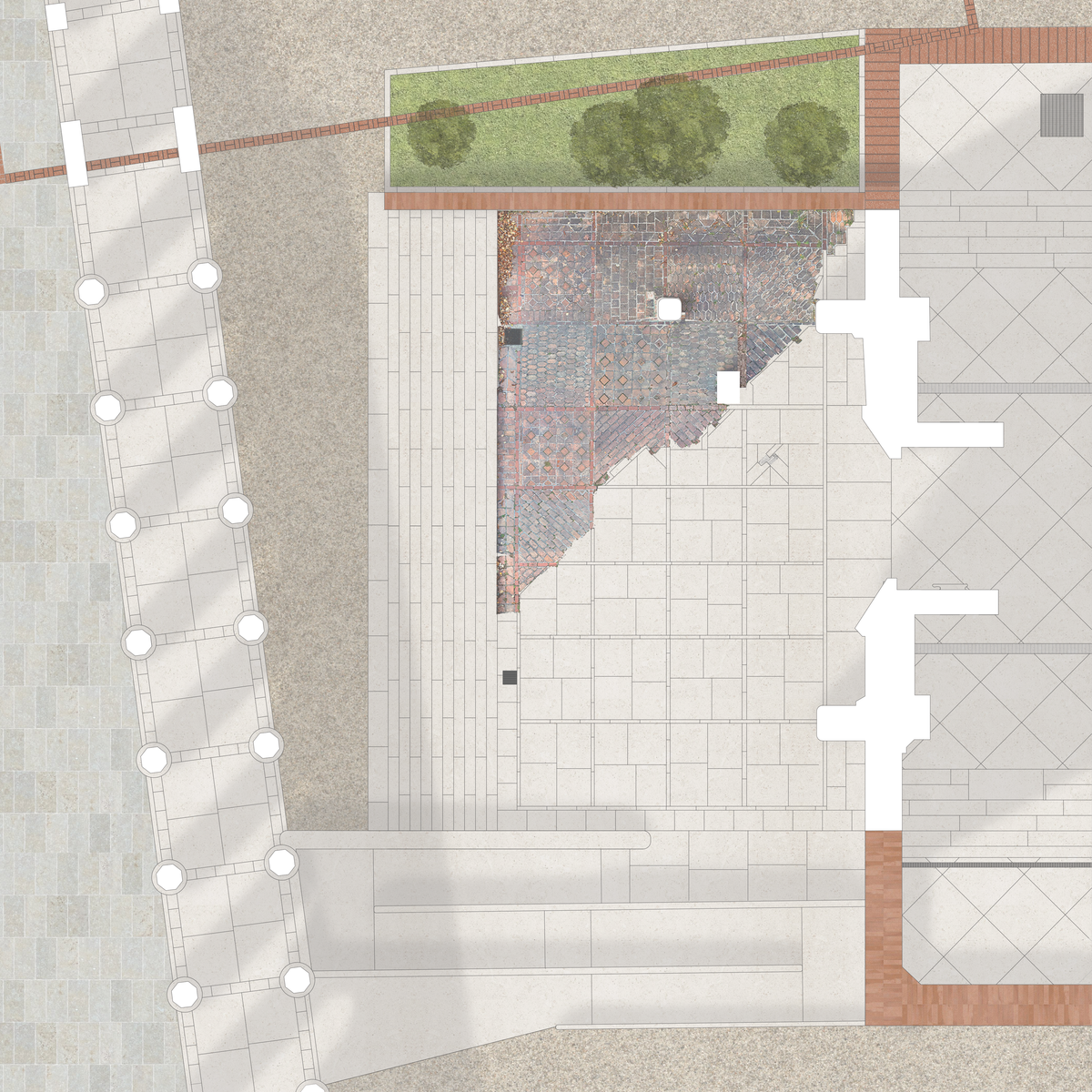
The flooring is renewed to ensure barrier-free movement for everyone, including people with mobility impairments. The interior stairs of the church are redesigned into accessible seating that allows the space to be used for studying, or gathering.
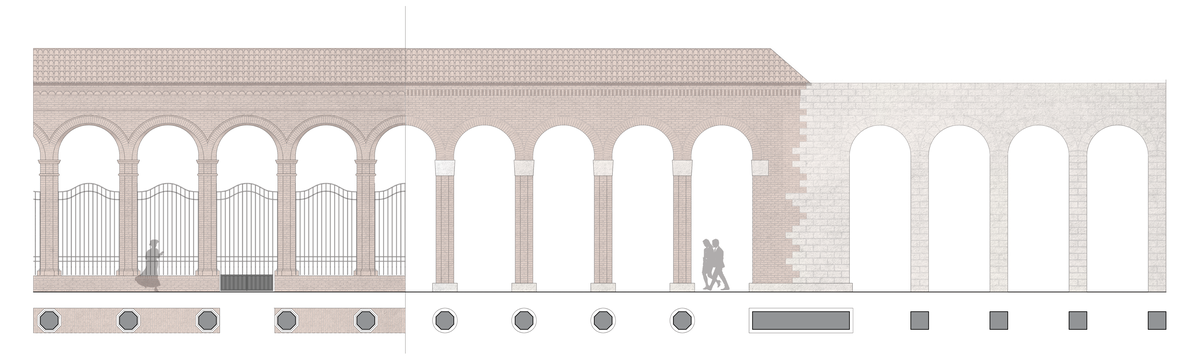
A new colonnade reinterprets the historical arcade once present on the site, extended beyond its original footprint, it becomes a contemporary addition that continues the narrative of the place.
In honour of the past, the new ground pattern incorporates brick lines that trace the footprints of the former buildings, subtly revealing the site’s history within the contemporary landscape.
Software used: AutoCad, Rhino, Photoshop
Team: Xenia Klimova, Joud El-Khatib, Klaudia Porzycka, Ester Qytyku, Milena Obada
Instructors: Alex Scott-Whitby, Tom Joy
© 2026 Xenia Klimova. All rights reserved.